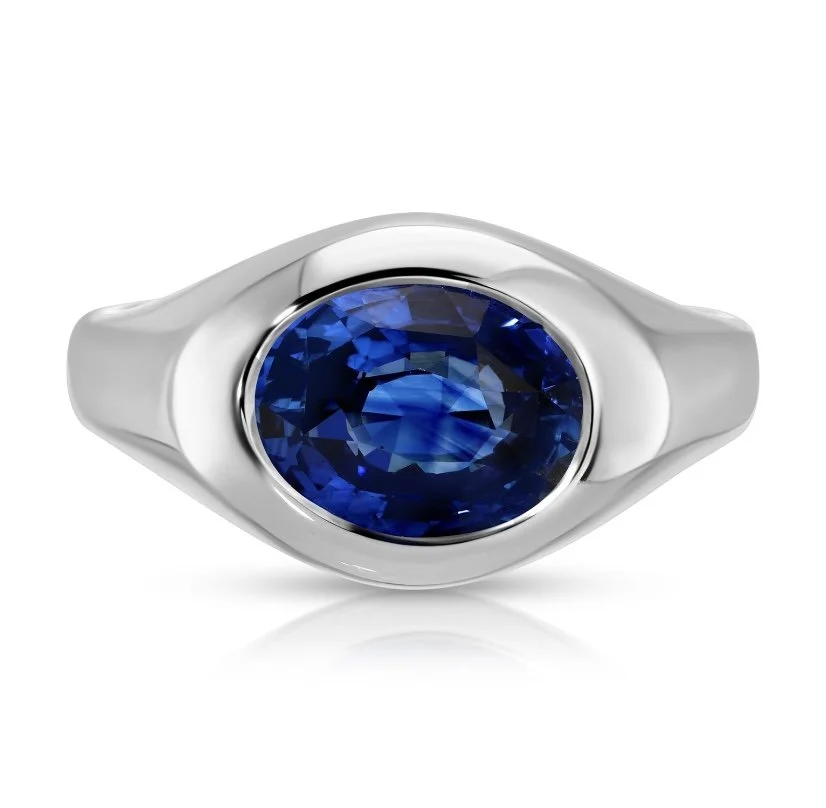
Complication Nine
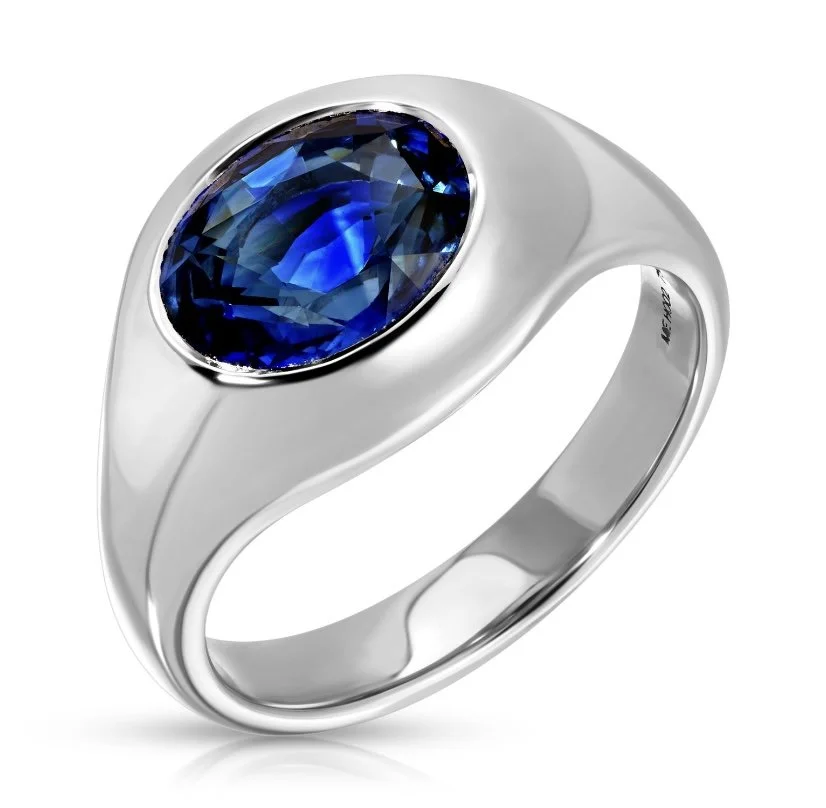
Brief
The client wanted a 5ct Natural Royal Blue Ceylon Sapphire
Signet Ring
18k White Gold
The Gem
Finding a 5ct Natural Blue Sapphire mined from Ceylon (Sri Lanka) that has high clarity and the correct proportions was an exercise in patience. It was to begin with having the proper connections to source this material. Next it was the determination to get exactly what was requested and the willingness to continually turn down gem after gem risking angering and losing valuable contacts. (Gem dealers do not like when you turn down a stone they prize!)
With perseverance I prevailed and got the client what they requested albeit a slight compromise of the stone being 4.60cts. The client was clear at the absolute rarity of this gem and realizing the constant competition that arises each time one of these gems comes to market. Its most famous cousin was given to Princess Diana as an engagement ring and now prominently sits on Princess Kate’s finger forever stoking the desire to have one of these precious gems.
Sketches, Renderings and CAD Illustrations
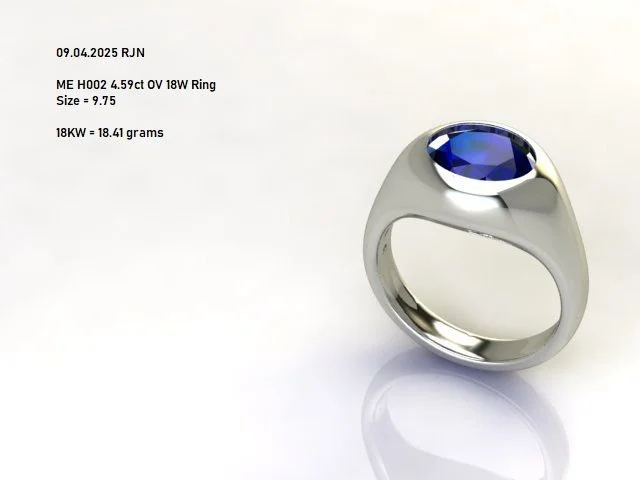
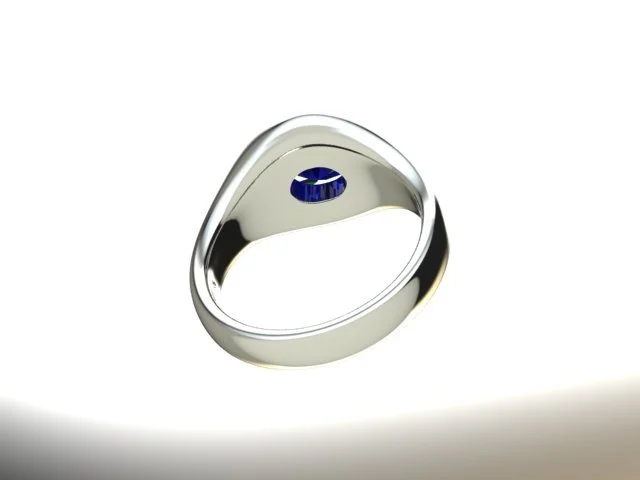
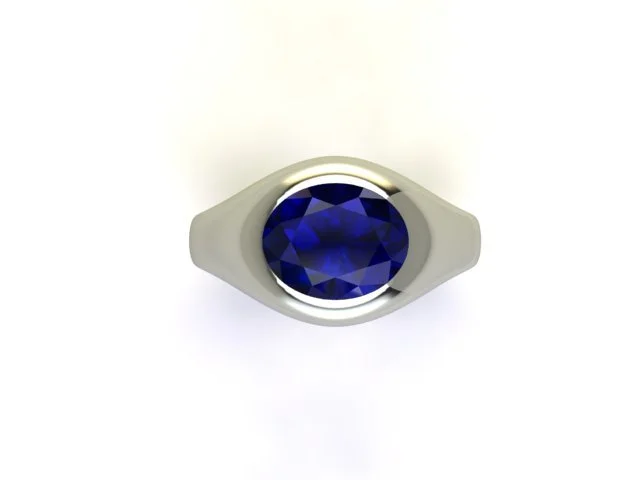
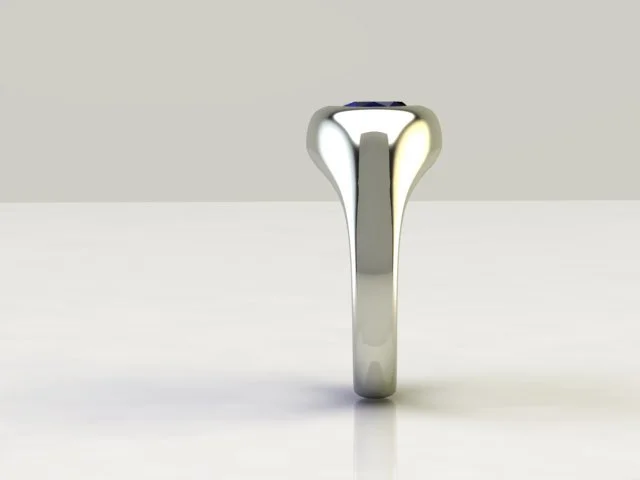
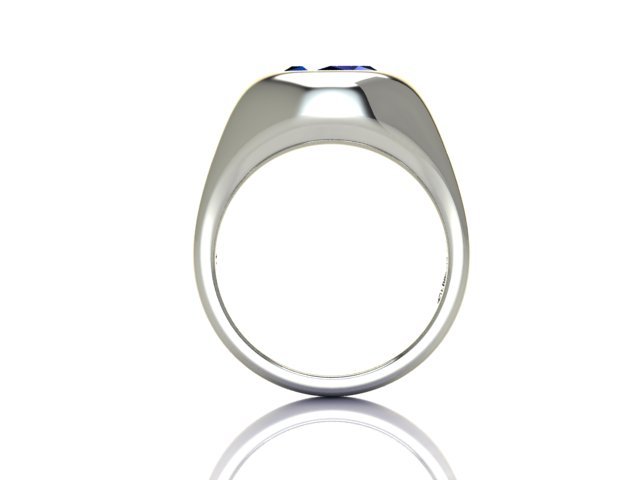
The Setting
The next dilemma is how do you best display such an exquisite gem? The client requested something for their right hand and given this was not an engagement ring we settled on a classic signet ring which is a fairly broad term.
Given free license to create from there I designed a velvety sculptural ring. In choosing to best protect the sapphire I chose a low burnished setting which would offer the most protection however it is the most risky of settings because if not done by a master the stone will surly be broken while being set!
The final polished engraved edge around the sapphire allows the stone to dance in its own brilliance. Note: all our breaths were held when this was being done because it risks scratching the stone.